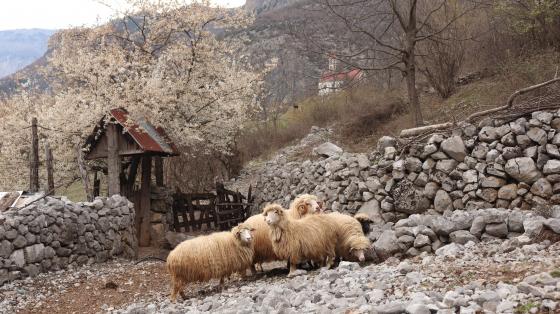


I. Environmental conservation and the social dimension: exploring how environmental resource management and policies influence nature and indigenous communities and vice versa
In an era of unprecedented global change, it is essential to move toward the sustainable use of environmental resources. Land-use change is a major cause of the biodiversity crisis and a key factor in the climate crisis. Furthermore, land-use change often sparks conflict, due to differing opinions and competing demands among different population groups and between institutions and local communities. Therefore, there is a need to develop a framework to support principled land-use planning processes that consider and balance the competing interests of socioeconomic, environmental, and social justice concerns also considering changes in their interrelations through times. This section invites papers to explore the social and environmental consequences of different management practices, to reconstruct their historical transformations, as well as examine the role of local communities and assess their involvement in the decision-making process. Eventually, it is also useful to evaluate how the difference among geographical areas affects conservation policies.
Keywords: Environmental History and Archaeology; Historical Ecology; Political Philosophy; Ecology; Nature Conservation; Territorial Rights; Local Communities
Research disciplines: Natural and Environmental Sciences; Landscape archeaology; Philosophy (among others)
II. Integrated Approaches and Historical Perspectives on Environmental Risk Mitigation
This session aims to stimulate interdisciplinary reflection on the development of innovative approaches and models for mitigating environmental risks – such as hydrogeological instability, wildfires, biodiversity loss, and soil degradation – that go beyond a narrow focus on site-specific analysis and isolated interventions. Attention will be paid to the need to integrate the spatial (from the local area to the watershed) and temporal dimensions of environmental processes, while considering the specificities of local contexts. In this perspective, the analysis will be based on the study of the characteristics and historical transformations of widespread and decentralized systems for managing environmental resources, as well as on the assessment of their long-term effects. A critical re-examination of these historical systems, considering contemporary scientific knowledge, can provide useful tools for defining innovative models for the conservation and sustainable enhancement of natural and cultural heritage.
Keywords: Interdisciplinary Approaches; Environmental Governance; Sustainable Development; Climate Change Adaptation; Sustainable Resource Management; Sustainability of Historical Resource Management Practices, Rural Archaeology
Research disciplines: Civil engenieering; Natural and Environmental Sciences; Landscape archeaology (among others)
III. Modelling of emerging commons and regulation of common goods
This session invites papers that consider the extension of the concept of common good, historically associated to the environmental resources management, mainly for primary production and control of road networks, towards the current minimum requirements of quality of life, associated with the availability and use of energy resources and digital data, as well as essential services enabled by digital infrastructures, such as healthcare in rural and mountain areas. Contributions may address, among others, strategies to restore the attractiveness of inner areas by making traditional and emerging common goods available, with the need for community-based management and for the definition, adaptation, and refinement of legislative and regulatory rules derived from the concept of traditional commons and transposed to their emerging form. Interdisciplinary approaches and case studies are particularly encouraged, including analyses of digital healthcare and telemedicine as emerging common goods supporting territorial cohesion. The papers should address the modelling and optimisation of the management methods of common resources or propose innovative or multivalent regulatory solutions, while adopting a strongly interdisciplinary approach. Papers that bridge mathematical/technical models with management, regulation, and policy analysis are especially welcome.
Keywords: Common Goods and Services; Legislation and Regulation on Commons; Energy Communities; Digital Communities; Data Management and Protection Systems; Modelling, Simulation, and Innovative Learning; Digital Healthcare and Telemedicine
Research disciplines: Eletronics and Communication Engeneering; Mathemathical Modelling; Political Sciences; Law (among others)
IV. Ecosystem Services: Unlocking Resilience for Climate Challenges
This session invites papers that explore how ecosystem services enhance adaptive capacity in the face of climate change and related risks. We welcome original research that examines how ecosystem services influence risk perception, support adaptation strategies, and shape governance at different scales. Contributions may address, among others, the role of ecosystem management in reducing social and ecological vulnerabilities, strengthening community resilience, and fostering social cohesion. Moreover, contributions are expected to foster dialogue with landscape architecture, spatial planning, and ecological sciences, integrating socio-economic analysis with landscape design, ecosystem management, and ecological assessment frameworks. Interdisciplinary approaches and case studies are particularly encouraged, especially papers that bridge economic valuation and policy analysis with landscape-based strategies and ecological processes. Invited papers will primarily engage with economic perspectives, including environmental and ecological economics, and landscape architecture.
Keywords: Ecosystem Services; Adaptive Capacity; Climate Change Adaptation; Environmental and Ecological Economics, Nature-Based Solutions; Landscape Planning and Design; Socio-Ecological Resilience; Multi-Level Governance
Research disciplines: Environmental Economics; Landscape Architecture; Sociology (among others)